In this article
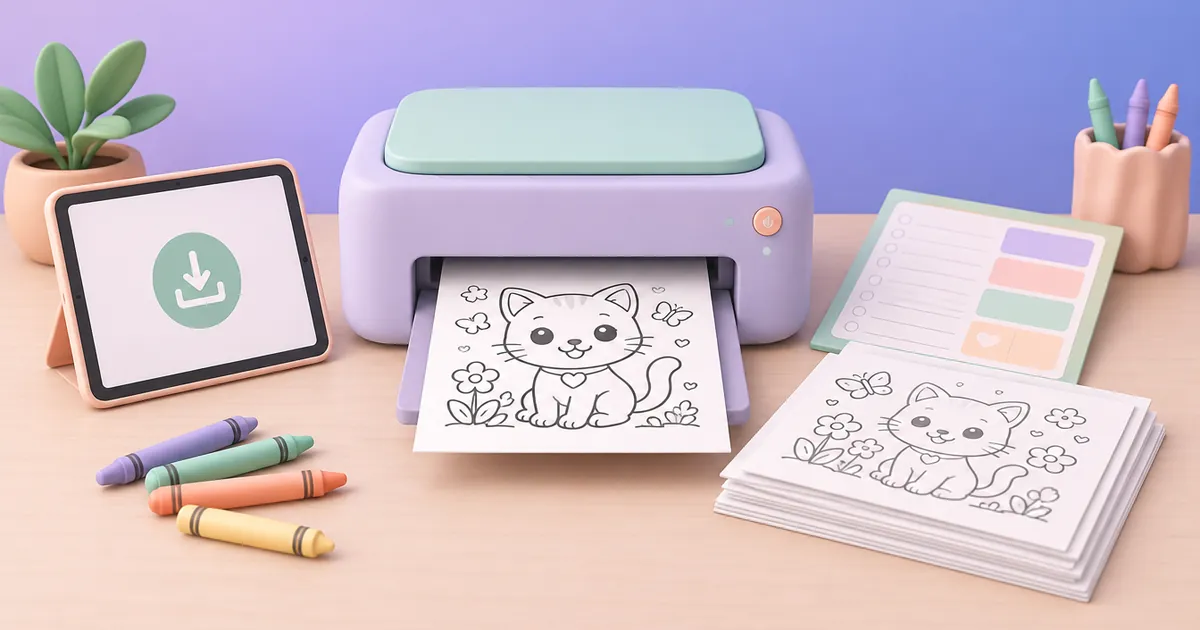
Printable digital products, such as coloring books, kids’ activity sheets, planners, calendars and posters, are among the most attractive things to sell online. You design them once, there is no inventory or shipping, and customers get them instantly after paying.
1. Choose a specific niche
Instead of “products for kids” in general, choose a narrower niche such as “preschool letter-tracing worksheets” or “seasonal coloring books”. A specific niche makes it easier to reach your audience and build a store with a clear identity.
2. Research before you design
Search marketplaces for keywords related to your idea and look at the best-selling products and their reviews. Read the negative reviews in particular: they reveal what customers are missing and what you can do better.
3. Prepare professional files
- Resolution: design at 300 DPI so prints are crisp.
- Sizes: provide the two most common sizes: US Letter for North American customers and A4 for the rest of the world. This simple step greatly reduces questions and refund requests.
- Margins: keep safe margins so home printers don’t cut off the edges of your design.
- Format: PDF is best for printing because it keeps the layout identical on every device.
- Size: compress large files so they download easily, without sacrificing print quality.
4. Price smartly
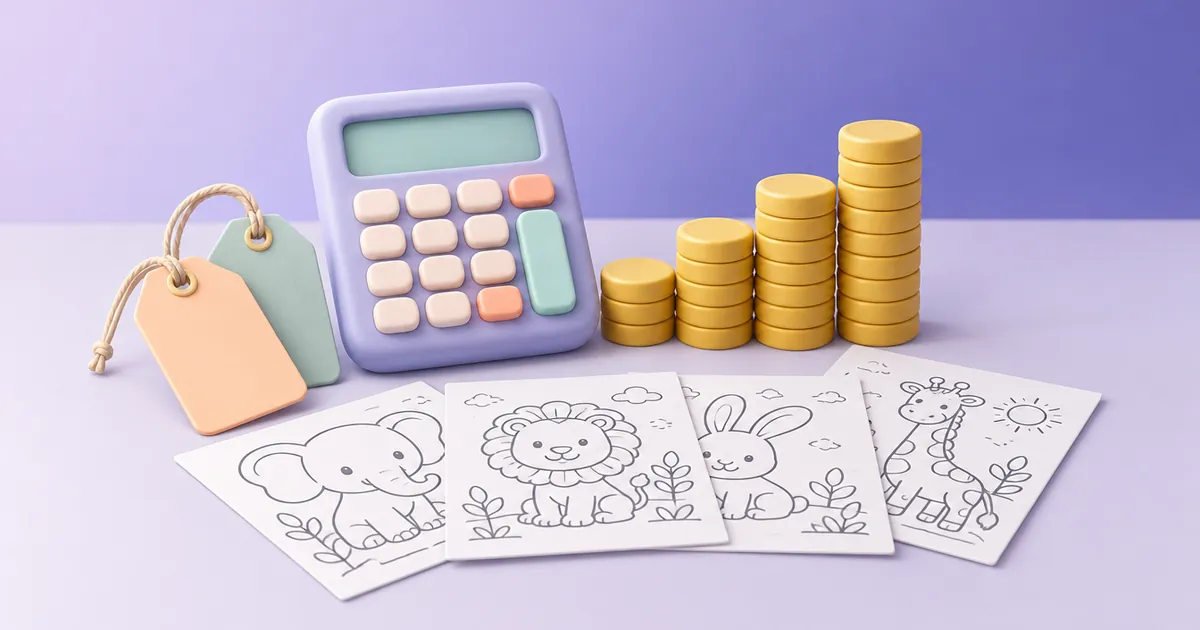
Don’t make a low price your only selling point. Account for the platform’s fees on every sale, as fixed fees take a large share of cheap products. Use our Etsy fee calculator with the digital product option to see your net profit at different prices, and consider bundles to raise the order value.
5. Create images that sell
Customers cannot browse the file before buying, so your images must show exactly what they will get: the cover, sample inside pages, a mockup of the product printed and in use, and an image showing sizes and page count. Compress them with our image compressor so they load fast.
6. Write a description that answers every question
Make clear that the product is digital and nothing will be shipped, and state the number of pages, sizes, file format, how to download and print, and the personal or commercial use terms.
7. Protect your rights
Use fonts and graphics licensed for commercial use, and don’t use protected characters or trademarks. State clearly in the description whether the product is for personal use only.
8. Keep adding products
Successful digital shops grow by accumulation. Every new product is another chance to appear in search, and satisfied customers come back for complementary products. Plan to add products regularly, especially before seasons such as back to school and holidays.
Summary
Success with printables doesn’t come from a single product but from a polished collection serving a specific audience, with professional files in several sizes, clear images and descriptions, and well-calculated pricing.